
When a Neighbour Crosses the Line: Boundary Disputes in Scotland
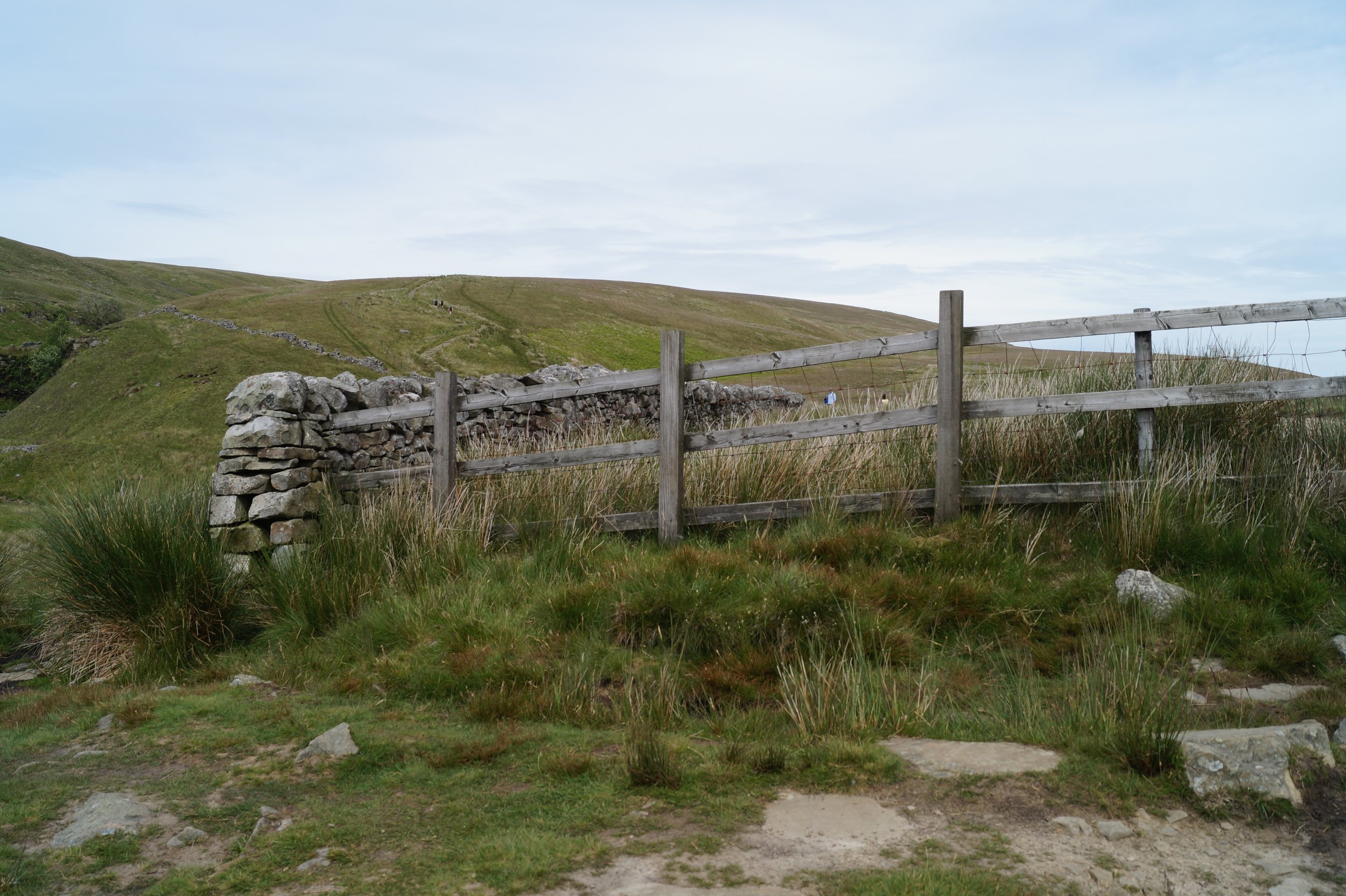
Boundary disputes have a reputation for being small, and they usually start that way. A fence goes up a foot further over than it used to. A hedge grows. An extension goes in. Somebody plants a row of leylandii. What makes them difficult is not the size of the strip in question, it is that the people arguing about it have to live next door to each other afterwards. Here is how boundaries actually work in Scotland, and how to sort a dispute out before it becomes something worse.
The fence is not the boundary
This is the single most common misunderstanding, so it is worth stating plainly. The legal boundary of your property is whatever your title deeds say it is. The fence, wall or hedge on the ground is evidence of where people have treated the boundary as being, which is not at all the same thing.
Fences get replaced. They get moved a few inches when the posts rot. Hedges creep. Over thirty or forty years a physical feature can drift a surprising distance from the line on the deed without anybody noticing, until somebody sells, extends or falls out.
Where the answer actually lives
Your starting point is always the title. If your property is on the Land Register, you will have a title plan with the extent of your property outlined on an Ordnance Survey base map. That is a great deal clearer than what came before, but it is not a millimetre-perfect survey. The mapping is drawn to the scale of the OS map underneath it, so it establishes the general extent of your property rather than pinpointing the line to the centimetre. Registers of Scotland maintain the register and can be found at ros.gov.uk.
If your title is still in the older Register of Sasines, which is common with property in Argyll that has not changed hands for some time, matters are less tidy. Sasine descriptions can be verbal rather than mapped, and where there are plans they may be hand drawn, at an awkward scale, or reference features that no longer exist. Interpreting them is genuinely skilled work.
Where there is doubt, a plans report from Registers of Scotland compares the boundaries in your title with the current Ordnance Survey map and tells you whether they match. It is a modest cost and it very often settles the question before anyone needs to instruct anyone else. Where it does not, a chartered land surveyor can plot the deed boundary on the ground.
Possession counts, and ten years is the number
Scots law takes possession seriously, though not in the way people often assume, and this is one place where it parts company with England.
Under the Prescription and Limitation (Scotland) Act 1973, if you hold a deed, recorded in the Register of Sasines or registered in the Land Register, whose terms are capable of covering a particular piece of ground, and you then possess that ground openly, peaceably and without judicial interruption for a continuous period of ten years, your title to it becomes exempt from challenge. This is positive prescription. It is how a strip that your title could be read as including, and which has been occupied and treated as part of a garden for the required period, can end up unchallengeably yours, even if the boundary had once looked uncertain.
The essential point, and it is where Scotland differs from the English idea of adverse possession, is that prescription works on a title. It fortifies a deed capable of covering the ground. It does not hand ownership to someone who simply occupies land they have no title to. Possession on its own, however long, is not enough.
Two practical consequences follow. First, if you think a neighbour is encroaching, do not sit on it. Silence and delay are not neutral in this area of law. Second, if your own title could be read as taking in a piece of ground you have openly used for many years, that combination may put you in a stronger position than you assume, and it is worth checking before you concede anything.
Encroachment, and what a court can do about it
Encroachment is the term for a permanent intrusion onto someone else’s land: foundations, a wall, an overhanging roof, a shed corner, a driveway edge. The starting point is that an owner is entitled to have their property left alone, and the courts can order removal or grant interdict to stop work in progress.
That said, the remedy is not automatic. Courts have a discretion and will look at the scale of the intrusion, whether it was deliberate, the cost of putting it right against the harm done, and whether the objecting owner stood by and watched it happen. Acquiescence, meaning going along with something and only objecting later, can weaken an otherwise good case considerably. Again, the message is to raise it early.
Who owns the wall?
Ownership of a boundary feature follows the ground it stands on. A wall built entirely within your land is yours. Where a wall or fence sits astride the boundary, the usual position is that each owner owns the half on their side, with a mutual obligation of support between them, and maintenance shared. Your deeds may say something different, though, and many do. Real burdens in the title can allocate responsibility for a particular fence to a particular property, so the deeds should always be checked before anyone starts quoting general rules at anyone else.
A distinctly Scottish point for rural neighbours
If your land runs to more than five acres, there is a pair of statutes still on the books that surprises most people who hear about them: the March Dykes Acts of 1661 and 1669.
Between them, they allow a rural proprietor who wants to enclose the march, meaning the boundary, between their land and their neighbour’s to apply to the court to require the neighbour to bear an equal share of the cost. Although the Acts talk about dykes, they are understood to cover boundary features generally. The court has a discretion and will not order a contribution where the expense is out of proportion to the benefit. In a modern case, a proprietor who wanted a dry stone dyke was refused a contribution because a perfectly serviceable stock-proof fence was already in place.
These provisions are not often used, but for farms, crofts and larger holdings across Cowal and Argyll they remain live law and occasionally very useful.
Hedges, trees and light
Hedges are their own category. The High Hedges (Scotland) Act 2013 lets the owner or occupier of a domestic property apply to the local authority for a high hedge notice where a hedge on neighbouring land adversely affects the reasonable enjoyment of their home. To qualify, the hedge must be a row of two or more trees or shrubs, more than two metres tall, and forming a barrier to light. A hedge with significant gaps will not count, and single trees are outside the Act altogether. Argyll and Bute Council administer applications locally.
Two things are worth knowing before anyone reaches for the form. The Council must dismiss the application unless you can show you have taken all reasonable steps to resolve matters yourself first, which means keeping a record of your attempts. And the fee in Argyll and Bute is £603, which is a powerful incentive to have the conversation over the fence instead.
Branches and roots crossing the boundary are dealt with differently, at common law rather than under the Act, and the position is more nuanced than the popular belief that you can simply cut whatever comes over. It is worth taking advice before taking a saw to anything.
Getting it resolved
In our experience the order of events that works is fairly consistent.
Establish where the boundary actually is, from the deeds, before saying anything to anyone. Arguing from a position you have not checked is how disputes get expensive.
Have the conversation. A great many of these are honest misunderstandings, and a neighbour who has genuinely got it wrong will usually rather know now than later.
If that does not work, a letter from a solicitor setting out the title position calmly and without threat resolves a good proportion of the remainder.
Consider mediation. It is quicker and very much cheaper than court, and it leaves a relationship you can live with. Scottish Mediation can point you to an accredited mediator.
If agreement is reached, record it properly. A boundary agreement can be documented and registered so the position is settled for you and for whoever comes after you. This is the step people most often skip, and it is the one that stops the argument recurring in fifteen years.
Court action last. It is available, and sometimes necessary, but the costs of a contested proof can dwarf the value of the ground in dispute.
One more reason not to leave it
Unresolved boundary disputes have a habit of surfacing at the worst possible moment, which is when you come to sell. A purchaser’s solicitor requesting a plans report is very often the first person to notice that the fence and the deed do not agree, and a live dispute has to be disclosed. It can delay a sale, put buyers off, or affect the price. If you know there is an issue, dealing with it while there is no transaction on the table is far easier than dealing with it a fortnight before a date of entry. Our buying and selling guide covers what else to expect when you come to move.
How Stewart & Bennett can help
We deal with property and private client work of every description, from wills to wind farms, and boundary questions come across our desks in both their friendly and their unfriendly forms. We can examine your title and tell you plainly what it says, obtain a plans report, advise on whether prescription helps or hinders you, write the letter that resolves it, or prepare and register a boundary agreement once you and your neighbour have reached terms. Where matters cannot be settled, we can advise on your options in court. You can read more about our general practice work or simply get in touch.
The best time to ask is early, when the question is still about a fence rather than about principle.
Frequently asked questions
My neighbour has moved the fence. Can I just move it back?
Please do not. Self-help tends to escalate matters and can leave you in the wrong even where the underlying position favours you. Check the title first and take advice.
The fence has been in the same place for twenty years. Does that make it the boundary?
It may well do, through positive prescription, but that depends on what the deeds say and on the nature of the possession. It is exactly the sort of question worth putting to a solicitor rather than guessing at.
Who is responsible for repairing a mutual fence?
Usually both owners, unless the title deeds allocate it to one property. Check the deeds before assuming either way.
My neighbour’s hedge is blocking all my light. What can I do?
If it is a row of two or more trees or shrubs over two metres that forms a barrier to light, you can apply to Argyll and Bute Council for a high hedge notice, but only after you have made genuine attempts to resolve it yourself. There is a fee of £603.
Do I have to tell a buyer about an ongoing dispute?
Yes. A live boundary dispute is a material matter and needs to be disclosed. It is one of the reasons we encourage people to resolve these things well before a sale.